Cabin Crew Career Roadmap: The Best Flight Attendant Guide (2025)
admin · 23 November 2026
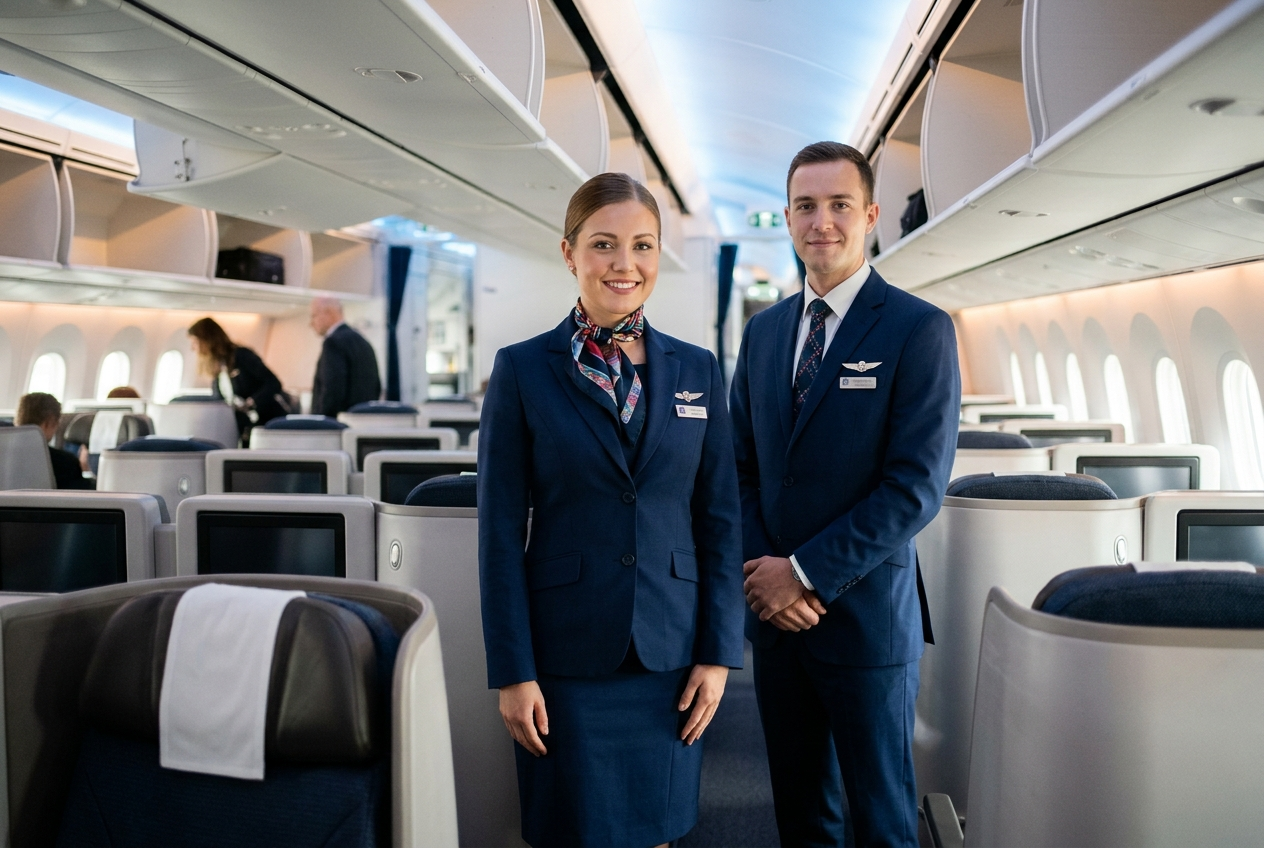
Embarking on a journey following a structured Cabin Crew Career Roadmap is one of the most rewarding and dynamic professional paths in global civil aviation. While flight attendants are globally recognized as the welcoming face and customer service ambassadors of commercial airlines, international civil aviation authorities define them first and foremost as essential in-flight safety, security, and rescue officers.
1. Professional Definition and Primary Safety Mission
From the perspective of regulatory bodies such as the International Civil Aviation Organization (ICAO) and EASA, a flight attendant’s primary responsibility is maintaining passenger safety during normal flight phases and executing rapid, decisive emergency response operations during unforeseen incidents. In any aviation crisis, every member following the Cabin Crew Career Roadmap must be fully equipped to direct rapid passenger evacuations, manage in-flight medical crises, and mitigate security threats efficiently.
2. General Eligibility Criteria and Physical Prerequisites
Aviation authorities and international airlines enforce stringent entry criteria to ensure operational readiness:
- Age Requirements: Minimum 18 to 20 years old (dependent on airline and country jurisdiction).
- Educational Background: High school diploma at minimum. University degrees in foreign languages, hospitality management, psychology, or nursing offer substantial competitive advantages. For candidates interested in technical aircraft pathways, read our Part-66 Aircraft Engineer Career Guide.
- Medical Fitness (Medical Class 2 / Cabin Crew Medical): Impeccable cardiovascular health, robust spinal alignment, physical resilience for alternating shift patterns and long-haul flights, and clear ear, nose, and sinus functions able to handle barometric pressure shifts.
- Physical & Grooming Standards:
- Proportionate height and weight according to healthy Body Mass Index (BMI) standards.
- Vertical arm-reach capability (minimum female height ~160–165 cm; male height ~170–175 cm) ensuring unobstructed access to overhead emergency and safety equipment.
- No visible scars, burns, or tattoos when wearing standard company uniform garments.
- Aquatic Motor Skills: Strong swimming capability, including passing deep-water survival and unassisted rescue assessments.
- Aviation English Proficiency: Fluent spoken English with absolute command of standard aviation phraseology and Public Address (PA) announcements.
3. Comprehensive ATO Cabin Crew Training Syllabus
Accredited training at an Approved Training Organization (ATO) blends rigorous theoretical ground instruction with intensive practical drills:
Safety and Emergency Procedures (SEP)
- Emergency Evacuation: Executing complete aircraft cabin evacuation under critical emergency conditions in under 90 seconds.
- Slide Raft Operations: Deploying evacuation slides, ditching life-rafts, boarding protocols, and sea flotation management.
- In-Flight Firefighting: Hands-on containment utilizing Halon/BCF extinguishers, Protective Breathing Equipment (PBE) smoke hoods, and controlling galley/lavatory fires.
- Rapid Decompression: Instantaneous deployment of supplementary oxygen masks and immediate hypoxia mitigation protocols.
Aviation Survival and Emergency Medicine
- Extreme Survival Techniques: Post-ditching sea survival, desert, and jungle survival strategies following forced off-airport landings.
- Aero-Medical Emergencies: Cardiopulmonary Resuscitation (CPR), Automated External Defibrillator (AED) operation, shock mitigation, in-flight childbirth assistance, fracture stabilization, and acute medical management.
Cabin Management, Security, and In-Flight Hospitality
- Disruptive Passenger Management: De-escalating conflicts with disruptive or intoxicated passengers under strict legal frameworks.
- Aviation Security (AVSEC): Counter-sabotage measures, cabin pre-flight security searches, and anti-hijacking prevention drills.
- In-Flight Service Etiquette: Precision galley staging, premium culinary and beverage service standards, and VIP customer service excellence.
4. Examination, Licensing, and Airline Recruitment Milestones
Advancing successfully along this Cabin Crew Career Roadmap involves well-defined certification steps:
- Civil Aviation Authority Examination: Completion of ATO coursework followed by state examinations to earn the official Cabin Crew Attestation (CCA).
- Airline Recruitment Processes: Rigorous competency assessments, psychological evaluations, and practical group communication dynamics.
- Aircraft Type Rating & Conversion: Fleet-specific technical qualification covering emergency exit door operations, slide mechanics, and cabin systems for designated aircraft (e.g., Airbus A320, Boeing 737, or wide-body fleets).
- Supernumerary Familiarization Flights: Line flights executed under senior purser supervision to validate real-time operational competence.
5. Professional Career Hierarchy and Progression
Following initial line integration onto monthly flight rosters, professional flight attendants advance through a clear operational hierarchy:
- Flight Attendant (Main Cabin): Delivering core safety and service standards in economy cabin classes.
- Premium Cabin Crew: Managing bespoke dining and personalized comfort in Business and First Class.
- Purser / Senior Cabin Crew: Leading the cabin crew team and serving as the primary safety liaison to the flight deck Captain.
- In-Flight Service Manager (IFSM): Overall operational commander for large multi-aisle wide-body aircraft on long-haul routes.
- Cabin Crew Instructor / Examiner (ATO): Mentoring, instructing, and evaluating future generations of aviation cabin crew.