Part-66 B2 Avionics Engineer: Complete Career Guide (2025)
admin · 23 نوامبر 2026
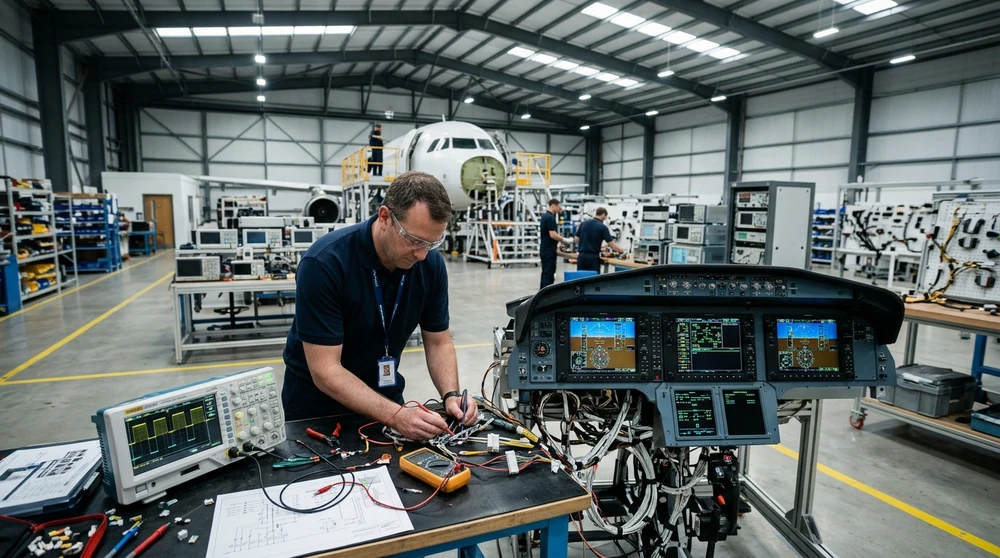
Becoming a licensed Part-66 B2 Avionics Engineer is one of the most prestigious, rewarding, and technically demanding pathways in modern aviation maintenance. A professional Part-66 B2 Avionics Engineer specializes in the critical electronic nerve center of commercial and private aircraft, ensuring optimal airworthiness and operational safety across global fleets.
1. Introduction to Avionics and Modern Aircraft Systems
The discipline of avionics merges aviation technology with advanced electronics. Today’s commercial aircraft rely extensively on Fly-By-Wire (FBW) flight control architectures, high-speed digital data bus protocols such as ARINC 429 and AFDX, and fully integrated glass cockpits. A certified Part-66 B2 Avionics Engineer holds the technical authorization and legal privilege to inspect, troubleshoot, maintain, and issue a Certificate of Release to Service (CRS) for sophisticated electrical and electronic installations.
2. Core Competencies and Educational Prerequisites
Aspiring candidates aiming for a career as a Part-66 B2 Avionics Engineer must cultivate both academic depth and precise technical aptitude:
- Educational Foundation: A strong background in STEM disciplines, electronics, mathematics, or physics.
- Technical Acumen: Deep understanding of microprocessors, digital logic gates, solid-state circuit design, and automated test bench operations.
- Language Proficiency: High-level proficiency in technical English to accurately interpret Aircraft Maintenance Manuals (AMM), Illustrated Parts Catalogs (IPC), and complex Wiring Diagram Manuals (WDM).
- Physical Requirements: Excellent color vision (crucial for complex wire harness identification and display calibration) and fine motor dexterity.
3. Professional Training Pathways and Entry Options
To qualify as a licensed engineer, candidates typically follow structured educational routes:
- Approved Part-147 Training Organizations: Enrolling in a certified training organization drastically streamlines the licensing timeline and provides structured laboratory instruction. For related pathways, explore our comprehensive Part-66 B1 Aircraft Maintenance Engineer Guide.
- Aviation Technical Universities: Pursuing specialized bachelor’s degrees in Avionics Engineering or Electrical & Computer Systems Engineering.
- Direct Industry Apprenticeship: Gaining foundational workshop and line maintenance experience while preparing independently for licensing examinations.
4. Complete Part-66 Basic B2 Modular Curriculum
Every prospective Part-66 B2 Avionics Engineer must master and pass stringent regulatory module examinations established by civil aviation authorities such as EASA (European Union Aviation Safety Agency):
- Module 1 & Module 2: Advanced Mathematics and Applied Physics.
- Module 3 & Module 4: Electrical Fundamentals and Electronic Fundamentals (semiconductor theory, amplifiers, and power supplies).
- Module 5: Digital Techniques and Electronic Instrument Systems (data buses, flight deck EFIS displays, and software configuration).
- Module 6 & Module 7: Materials, Hardware, and Standard Aviation Maintenance Practices.
- Module 8 & Module 9: Basic Aerodynamics and Human Factors in Aviation Safety.
- Module 10: Aviation Legislation, Airworthiness Directives (AD), and Continuing Airworthiness regulations.
- Module 13: Comprehensive Aircraft Avionics Systems, including:
- VHF, HF, and SATCOM Satellite Communication Networks.
- Precision Navigation Systems (VOR, ILS, DME, GNSS, TCAS, and Weather Radar).
- Inertial Reference Systems (IRS) and Air Data Computers (ADC).
- Flight Management Systems (FMS) and Automatic Flight Control Systems (Autopilot).
- Main and Emergency AC/DC Power Generation and Bus Distribution.
- Module 14: Electronic Engine Control, Propulsion Electronics, and FADEC (Full Authority Digital Engine Control).
5. Licensing Milestones and Practical Experience (OJT)
Achieving the full B2 license requires a balance of formal exams and hands-on maintenance logbook records:
- Formal Modular Exams: Passing all required theoretical examinations with a score of 75% or higher.
- On-the-Job Training (OJT): Accumulating a minimum of 2 to 3 years of verified practical maintenance experience on operating commercial aircraft in Part-145 hangars.
- Logbook Assessment: Detailed documentation of tasks including wire harness repairs, LRU replacements, and functional testing.
- License Issuance: Final credential verification and oral assessment by the Civil Aviation Authority (CAA).
6. Career Opportunities and Industry Roles
With global fleet expansions and avionics modernization programs, the market demand for a certified Part-66 B2 Avionics Engineer continues to rise rapidly across:
- Line Maintenance Operations: Rapid troubleshooting of avionics squawks and aircraft electronic dispatch clearances under strict turnaround times.
- Component Overhaul Workshops: Component-level diagnostics, soldering, and calibration of sophisticated avionics LRUs (Line Replaceable Units).
- Avionics Modernization & Retrofit Projects: Upgrading navigation avionics, ADS-B Out systems, and in-flight entertainment (IFE) suites.