Commercial Pilot Career Guide: From Zero Hours to Airline Captain
admin · 22 نوامبر 2026
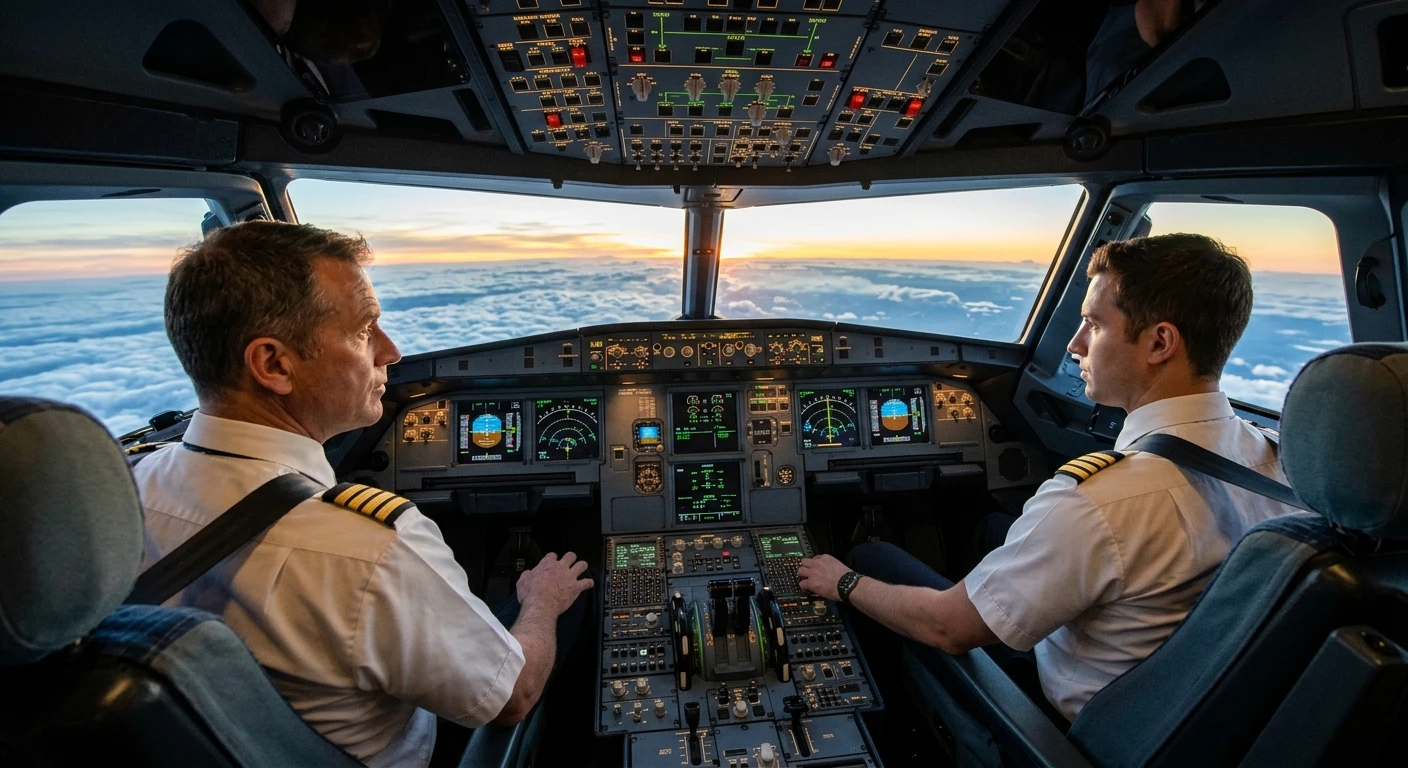
Becoming an airline pilot combines demanding academic study, practical flying, medical fitness and disciplined decision-making. This guide outlines the typical route from entry requirements to airline line training. Exact eligibility criteria, training-hour minima and licence privileges vary by country and licensing authority; applicants should verify current rules with their civil aviation authority and an approved training organisation (ATO).
1. The Nature of the Profession
Airline and commercial piloting is among the most complex and safety-critical professions in aviation. As a pilot in command, a pilot is responsible for the safe operation of the aircraft, the people on board and sound decisions when circumstances change or emergencies arise. The role draws on a combination of theoretical knowledge—including aerodynamics, meteorology, navigation and aviation law—alongside precise psychomotor skills, aviation-English proficiency and effective Crew Resource Management (CRM).
2. Entry Requirements and Prerequisites
Before committing to training, prospective pilots should check the requirements published by the authority that will issue their licence. Common considerations include:
- Age and education: The minimum age and education requirements depend on the licence and jurisdiction. A secondary-school qualification is commonly expected by training providers; mathematics and physics can be useful preparation, but are not a universal legal prerequisite.
- Aviation medical certification: Applicants aiming for a professional career generally need a valid Class 1 medical certificate. Arrange an examination with an authorised aviation medical examiner before paying substantial training fees. Assessment may cover vision, colour perception, hearing, cardiovascular and respiratory health, musculoskeletal fitness, and mental health, as required by the relevant authority.
- English-language proficiency: Pilots using radiotelephony internationally must meet the applicable language-proficiency requirements. ICAO operational language proficiency Level 4 is a commonly referenced minimum, subject to the licensing authority’s rules and endorsements.
- Other local requirements: Visa, residency, background-check, or military-service conditions may apply in some countries. These are jurisdiction-specific rather than universal aviation standards.
3. Choosing a Training Route
There are several ways to prepare for pilot training. The best route depends on the country, available programmes, budget and career goals.
Aviation-focused secondary education
An aviation-oriented secondary programme can introduce students to flight theory, aviation terminology and basic simulation. It may provide useful preparation for ground school, but completing such a programme does not itself grant a pilot licence or the privilege to fly.
University study
Some universities and applied-science institutions offer aviation-related degrees or pilot programmes, sometimes arranging practical flight training through partner ATOs. Academic study can provide valuable technical knowledge, but a degree alone is not a flight licence. Operational privileges depend on meeting the licensing authority’s requirements and receiving the relevant licence and ratings.
Approved training organisations
Enrolling directly with an authority-approved ATO is a focused route to flight training. Programmes typically combine ground instruction with practical flight training and examinations. Check the school’s approval, course structure, aircraft and simulator availability, instructor capacity, total cost, and what is included in the quoted price.
4. The Licence Pathway: From First Training to Airline Preparation
Step 1: Private Pilot Licence (PPL)
The PPL introduces core flying skills and aviation knowledge. Ground subjects commonly include aerodynamics, meteorology, navigation, aircraft systems and engines, aviation regulations, radiotelephony and human performance. Flight training develops basic handling, solo flying, cross-country navigation and, where required, night-flying experience. The applicant must pass the applicable theory examinations and practical skill test. A PPL generally permits flying for private, non-commercial purposes within its privileges and limitations.
Training-hour requirements depend on the regulator and course. As one example, EASA publishes a minimum of 45 hours of flight instruction for an aeroplane PPL; that figure should not be treated as a global rule or a prediction of the hours an individual will need. See the current EASA Easy Access Rules for Aircrew and confirm the requirements applicable to your licence authority.
Step 2: Commercial Pilot Licence (CPL)
CPL training builds on the PPL and develops the knowledge and handling skills required for commercial flying privileges. Training may cover advanced manoeuvres, operational planning, aircraft performance, weight and balance, and more complex systems. Applicants must satisfy the applicable theory, experience, medical and skill-test requirements. The required total flight time is not the same everywhere and may differ between integrated and modular routes.
Step 3: Instrument Rating (IR)
An Instrument Rating qualifies a pilot to operate under instrument flight rules when appropriately authorised, relying on cockpit instruments and approved navigation procedures rather than external visual references. Training commonly includes instrument procedures, radio-navigation aids and approaches such as ILS, VOR and RNAV, with practice in approved simulators and aircraft. The permitted operations and training-hour credit depend on the applicable rules and course approvals.
Step 4: Airline Transport Pilot Licence theory
Many airline-career pathways include advanced ATPL theoretical knowledge examinations. In some systems, a pilot who has completed the theory examinations but has not yet met all requirements for a full ATPL is informally described as holding a “frozen ATPL.” This is not a standalone licence category used identically worldwide. The number and names of examinations, and the requirements for the full ATPL, are set by the licensing authority. EASA’s consolidated aircrew rules explain the requirements applicable within its system.
5. Airline Selection, Type Training and Career Progression
- Additional preparation: Depending on the operator and regulatory system, candidates may complete Multi-Crew Cooperation (MCC) and Upset Prevention and Recovery Training (UPRT).
- Airline selection: Recruitment can include technical interviews, aviation-English assessment, aptitude testing and simulator evaluation. Requirements differ by airline and vacancy.
- Type rating: Pilots selected for a specific aircraft fleet complete training and assessment for that aircraft type. Training usually covers aircraft systems, procedures and simulator practice—for example, for an Airbus A320, Boeing 737 or ATR 72—subject to the operator’s fleet and approvals.
- Line training: After the required ground and simulator phases, pilots gain supervised experience on scheduled operations under the airline’s approved training and checking programme, typically with a designated training captain.
- Progression to captain: Advancement depends on regulatory experience and licence requirements, operator policy, performance and successful command assessment. Although 1,500 hours is an important threshold in some licensing contexts, it does not by itself guarantee an unrestricted ATPL or promotion to captain. The applicable authority’s requirements and the airline’s command process govern progression.
A successful airline-pilot career therefore involves more than accumulating flight hours. Medical fitness, continuing proficiency, sound judgement, teamwork and compliance with current regulations remain essential throughout a pilot’s career.